
Development of an Automated Electric Trolley for Efficient Material Handling
SSIP Grant: ₹ 80,754/-
Team members: Uday Jadav, Jaydeep Kathrotiya, Rakesh Yadav
Guided by: Prof.Hardik Khunt (Hardik.khunt.me@vvpedulink.ac.in)
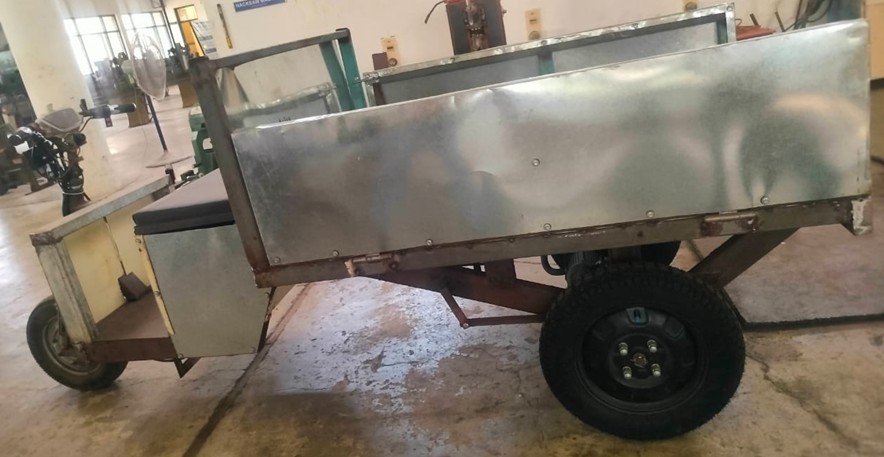
The global pollution is on rise and every effort made, being to reduce the Co2 emissions and save the planet. One such effort is the introduction of Electrical Vehicles (EV). The transport sector is one of the biggest emitters of Co2 and hence it is very important to convert the sector to a green sector. Indian government come up with ambitious plans of introducing the EVs to Indian market and keep in pace with the development of EVs globally. Electric Vehicles (EVs) are gaining momentum due to several factors, including the price reduction as well as the climate and environmental awareness. Nowadays increase fuel costs day by day so save fuel costs using electric vehicles. The second one is an environmental problem increase due to the use of conventional vehicles. The project titled “Development of an Automated Electric Trolley for Efficient Material Handling” focuses on designing and fabricating a low-cost, electric-powered trolley specifically tailored for indoor environments such as college campuses, laboratories, and workshops. The main objective is to enhance the ease of transporting materials within institutional settings while minimizing the overall production cost. The uniqueness of this trolley lies in its hybrid construction approach — using scrap materials for the frame and steering assembly, combined with newly purchased components like the electric motor, differential, controller, and battery. This not only ensures reliable functionality but also promotes sustainability and resource efficiency. Unlike commercially available e-loaders like the Surya E-Loader or Ashwa Loader, which are designed for outdoor, high-load applications, this trolley is optimized for smooth indoor surfaces and moderate loads, making it lightweight, cost-effective, and purpose-specific. The project demonstrates how functional and eco-friendly transportation solutions can be achieved within limited budgets using a combination of innovation and recycling.
Dung Collecting Machine
Team members: Archan Makadia, Devansh Bhatt,Arin, Yashdeep
Guided by: Prof.Hardik Khunt (Hardik.khunt.me@vvpedulink.ac.in)
This project focuses on the design, development, and testing of a manual cow dung collecting machine. The aim is to provide a cost-effective and efficient solution for farmers to streamline the process of collecting cow dung, a valuable resource for fertilizers and biogas production
To reduce human efforts while flying kite
Team Members: UDAY JADAV, JAYDEEP KATHROTIYA, DHAVAL DODIYA, VIDIT VADGAMA, VINIT PANSURIYA.
Guided by: Dr.Dipesh Kindaliya (dipesh.kindaliya.me@vvpedulink.ac.in)
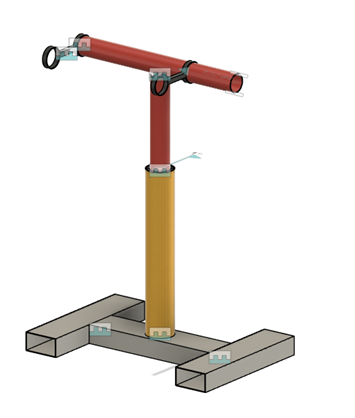
For flying kites firki is the primary thing that helps in holding the kite as required. Our phikri stand is an firki filled with manjha it self and if you want to fly away from your hand then this main component of kite will increase its flight power and then it will get rid of handholding after reaching a certain height where before no one could hold one’s kite for longer time.
By using of our friki stand there no need of any person to help us and easily we enjoy our kite flying to three to four hour and also by using our stand firkin is also rotate and re-wrap automatically and also we can adjust the stand by size of firki and by seeing the person height also we can adjust the height of stand.
INJECTION MOULDING MACHINE
Team members: Pathan Nihalkhan, Vadukiya Yash, Rajat Sharma, Jay Lashkari, Maru Dharmik
Guided by: Prof.Hardik Khunt (Hardik.khunt.me@vvpedulink.ac.in)
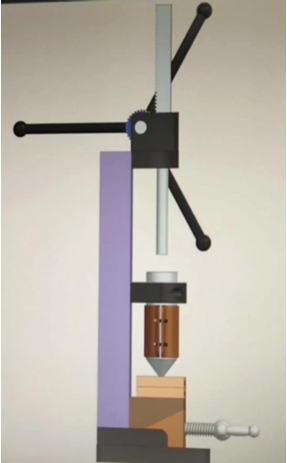
Injection molding is the most widely used polymeric fabrication process. This project describes injection molding process in detail along with its parameter and their effects on the molding component. Runner systems is playing the major role in the quality of the molded part. Each injection molding method works when a plastic material flows from the sprue into the runner system, and then through a gate into the mold cavity. Basically, runner system is of two types, hot runner and cold runner system, both having some advantages and disadvantages of each. This describes in details about effectiveness of hot runner and cold runner. Although hot runner gives better quality of products, many of the industries uses cold runner due to high cost and complexity of design.
Small Scale Vertical Axis Wind Turbine
Team members: Dudhat Dhyey
Guided by: Prof.Vijay Mehta (vijay.mehta.me@vvpedulink.ac.in)
This project is about designing and manufacturing of a Wind Turbine that can convert wind by using Vertical Axis Wind Turbines (VAWT) to a useful energy. The current power demand in INDIA is very high compared to power consumption average. This high demanding should take the focus of attention in thinking in different sources of energy.