
Chemical Process Industries Laboratory
The Chemical Process Industries Laboratory is an integral part of the Chemical Engineering Undergraduate Program, providing students with practical exposure to various chemical manufacturing processes and industrial operations. The laboratory is equipped with experimental setups that enable students to study unit operations, process equipment, and process control techniques commonly employed in chemical industries.
Through hands-on experiments, students gain an understanding of process technology, process operation, and safety while developing analytical, technical, and problem-solving skills. The laboratory also supports and encourages innovation and research and helps students bridge the gap between theoretical concepts and real-world industrial applications. This approach enhances their critical thinking, innovation, teamwork, and problem–solving abilities. The laboratory also emphasizes industrial safety practices, standard operating procedures, process hazard awareness, and responsible handling of chemicals, thereby preparing students to work safely and efficiently in industrial environments.
By integrating theoretical concepts with industrial practices, the Chemical Process Industries Laboratory prepares graduates for successful careers in chemical, petrochemical, pharmaceutical, dyes, environmental, and other process industries, while also providing a strong foundation for higher studies and research.
Major Equipments: Laboratory Oven, Muffle Furnace.
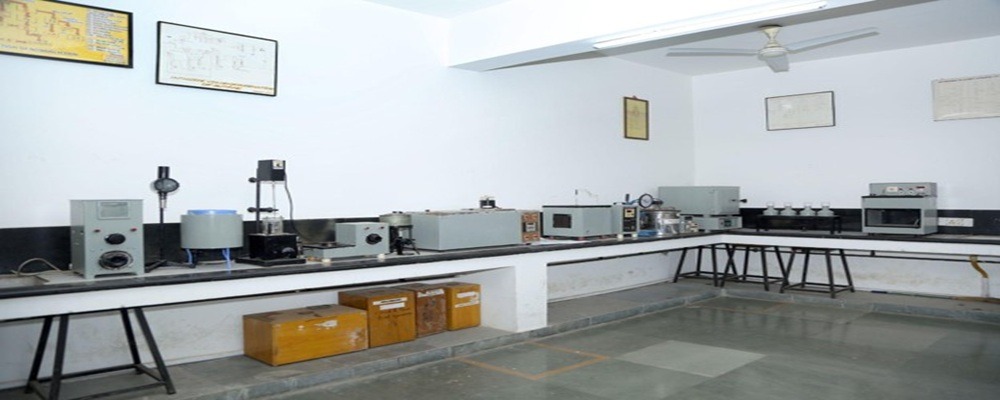
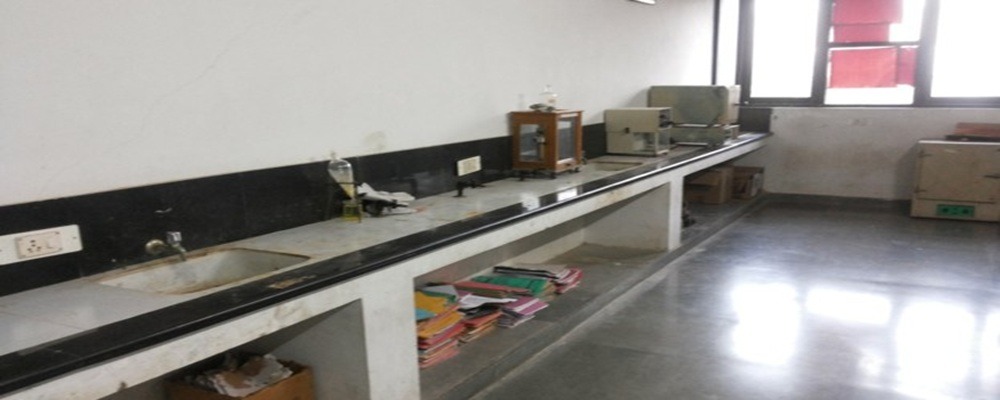
Heat Transfer Laboratory
The Heat Transfer Laboratory offers an interactive learning environment where undergraduate Chemical Engineering students can apply theoretical concepts to practical situations. The laboratory enables students to perform experiments on conduction, convection, radiation, heat exchangers, thermal conductivity. Through hands-on experimentation, students validate theoretical concepts, analyze experimental data, and develop skills in operating heat transfer equipment and modern measuring instruments.
The laboratory emphasizes energy efficiency, and safe engineering practices, preparing students to solve real-world thermal engineering challenges encountered in chemical process industries, power plants, petroleum refineries, food processing, pharmaceuticals, and other manufacturing sectors. Students gain hands-on exposure to heat transfer equipment, strengthen their technical and analytical abilities related to heat transfer applications.
By integrating theory with practical learning, the Heat Transfer Laboratory fosters analytical thinking, problem-solving abilities, and technical competence essential for the successful careers of future chemical engineers. The laboratory plays a vital role in meeting the practical learning objectives of the undergraduate Chemical Engineering curriculum while preparing students for industrial and research careers.
Major Equipments: Emissivity Apparatus, Thermal Conductivity of Metal Rod, Composite Wall Apparatus, Forced Convection Apparatus, Lagged Pipe Apparatus, Critical Heat Flux Apparatus, Shell and Tube Heat Exchanger, Finned Tube Heat Exchanger, Plate Type Heat Exchanger, Stefan-Boltzmann Apparatus.
Mass Transfer Operation Laboratory
The Mass Transfer Operations Laboratory provides students with practical exposure to fundamental mass transfer principles and their applications in separation and purification processes widely used in chemical and process industries.
The laboratory includes facilities for studying solid–liquid mass transfer, molecular diffusion, adsorption, drying, cooling tower operations, Extraction, Leaching, Crystallization, clausius clapeyron equation and distillation using a stirred solid–liquid mass transfer apparatus, diffusion coefficient measurement setup for CCl4 in air, fixed-bed adsorption column, tray dryer, forced-draft cooling tower, steam distillation and bubble-cap distillation column. These operations are important for separation, purification, solvent recovery, moisture removal, product concentration, gas–liquid contacting, and thermal conditioning in process industries.
These help Students to develop their ability to analyze experimental data, evaluate equipment performance, understand the influence of operating parameters, and relate laboratory-scale mass transfer operations to industrial separation processes, thereby strengthening practical, analytical, problem-solving, teamwork, and equipment-handling skills.
Mechanical Operations
The Mechanical Operations Laboratory provides students with practical exposure to fundamentals of the subject and their applications in size separations widely used in chemical and process industries.
The laboratory includes facilities for studying sieve analysis, various types of crushers like jaw crushers, roll crushers and ball mill, cyclone separators, ribbon blenders, agitators and batch sedimentation.
These help Students to develop their ability to analyze experimental data, evaluate equipment performance, understand the influence of operating parameters, thereby strengthening practical, analytical, problem-solving, teamwork, and equipment-handling skills. The laboratory also supports and encourages innovation and research and helps students bridge the gap between theoretical concepts and real-world industrial applications. This approach enhances their critical thinking, innovation, teamwork, and problem-solving abilities.
Modelling and Simulation Laboratory
The Modelling and Simulation Laboratory provides students with hands-on experience in Computer Aided Process Synthesis (CAPS) and Process modelling, simulation and optimization used in modern chemical industries. The laboratory enables students to analyze, model, simulate, and optimize chemical processes through computer-based tools.
The laboratory is equipped with software such as Microsoft Excel for engineering calculations and data analysis, and open-source software including Scilab for numerical computation and mathematical modelling, and DWSIM for steady-state process simulation and flowsheet development. These software tools help students perform material and energy balance calculations, thermodynamic property estimation, equipment modelling, process optimization, and process design studies.
The laboratory enhances students’ computational, analytical, and problem-solving skills, preparing them for industrial applications, higher studies, and research in chemical process engineering.
Petroleum Refinery and Petrochemicals
The Petroleum Refinery and Petrochemicals Laboratory provides students with practical exposure to fundamentals of the subject and their applications in petroleum refineries widely used in chemical and process industries.
The laboratory includes facilities for studying ASTM distillation, smoke point, Flash and Fire point, Cloud and Pour point, Engler Viscometer, Saybolt viscometer, Penetration Index, Ring and Ball apparatus, Ramsbottom apparatus, constant temperature bath for corrosive sulphur content.
These help Students to develop their ability to analyze experimental data, evaluate equipment performance, understand the influence of operating parameters, and relate laboratory-scale quality check of petrochemicals in industries, thereby strengthening practical, analytical, problem-solving, teamwork, and equipment-handling skills. The laboratory also supports and encourages innovation and research and helps students bridge the gap between theoretical concepts and real-world industrial applications. This approach enhances their critical thinking, innovation, teamwork, and problem-solving abilities.
Lab Technical Staff
Mr. Vijay Mehta
 B.Sc. (Chemistry)
Experience: 20+ years
Mrs. Rita Vachhani
 Diploma in Chemical Engineering
Experience: 19+ years
Mr. Nayan Vaishnani
 Diploma in Chemical Engineering
Experience: 18+ years